Microneedling & RF
Morpheus8
Radiofrequency microneedling that remodels collagen at depth to firm and refine the face, jawline, and neck — provider-led at Vue in Salt Lake City.
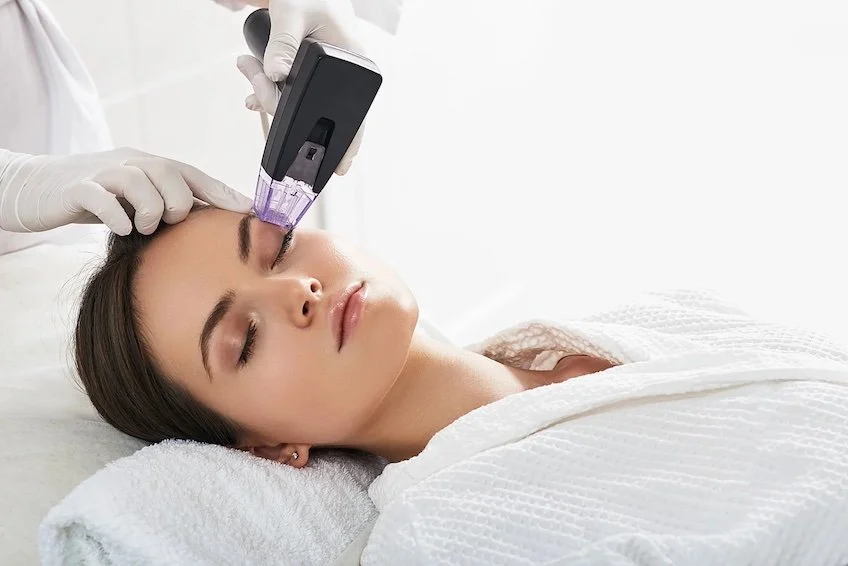
Radiofrequency microneedling that remodels collagen at depth to firm and refine the face, jawline, and neck — provider-led at Vue in Salt Lake City.
Morpheus8 is a fractional radiofrequency (RF) microneedling treatment by InMode that combines two proven approaches — microneedling and radiofrequency heat — to firm and remodel skin from within. Where traditional microneedling works primarily at the surface, Morpheus8 delivers RF energy through the needles into the deeper dermis and, in some areas, the layer beneath it, prompting your skin to build new collagen and tighten over time.
During treatment, an array of fine, insulated microneedles gently penetrates the skin and releases bipolar radiofrequency energy at the tip. That controlled heat triggers your body's natural repair and remodeling response deeper than needling alone can reach. The insulated needles and RF energy are not affected by melanin, which is why Morpheus8 can be used safely across Fitzpatrick skin types I through VI. Depth is adjustable and chosen by your provider for the area being treated — up to about 4 mm on the face, and deeper on the body with the dedicated body tip — so the treatment can be tailored to your skin and your goals.
In July 2024, Morpheus8 became the first and only fractional RF microneedling technology to earn FDA clearance for contraction of soft tissue. Its applicators are FDA-cleared for use in dermatologic procedures where coagulation or contraction of soft tissue, or hemostasis, is needed. The collagen remodeling and firming that clients seek Morpheus8 for is the clinical result of that process.
Both are excellent, but they do different jobs. SkinPen microneedling is mechanical collagen induction — ideal for surface texture, acne scars, pores, and tone. Morpheus8 adds radiofrequency heat and reaches deeper, which makes it better suited to firming and remodeling: skin laxity, deeper lines, and definition along the jawline and neck. Many clients benefit from one or the other depending on their goals, and your provider will help you choose. You can explore both on our microneedling and RF hub.
A typical visit takes around 90 minutes, including time for a numbing cream so you stay comfortable. Most clients describe the sensation as a warm, prickling pressure that is very manageable. Afterward it's normal to look flushed, similar to a mild sunburn, sometimes with light swelling or a gridded texture that fades over the next day or two. Every plan at Vue is personalized and provider-led — not a one-size-fits-all package — so your depth, energy, and treatment areas are set for your skin, not a template.
Either microneedling treatment can be enhanced with your own platelet-rich plasma or fibrin (PRP/PRF) applied to the skin to add growth-factor stimulation. PRP for aesthetics uses your own blood and is clinically supported, though it is not itself FDA-cleared for this use — ask your provider whether it's a good fit for you.
Downtime is modest. Redness and mild swelling typically settle within one to three days, and most clients return to normal activities quickly. Because Morpheus8 works by stimulating new collagen, results build gradually — you may notice smoother, firmer skin in the weeks following treatment, with continued improvement over the following months. Most people do best with a short series, spaced several weeks apart, and results are supported with sun protection and good skin care.
Vue is a physician-grade practice in Salt Lake City, and Morpheus8 sits in a meaningful place on the spectrum between skin care and surgery. If you're weighing whether firming treatments will get you where you want to go — or whether a surgical option might serve you better — Vue's board-certified facial plastic surgeon, Dr. Swenson, can advise. That's a genuine advantage: you get an honest, provider-led recommendation about what will actually deliver your result, whether that's Morpheus8, a series, or a frank conversation about alternatives.
Priced by area — full face, lower face, or neck — individually or as a full-face series of three. Approximately a 90-minute visit, spaced about four to six weeks apart. Additional facial, neck, and décolleté areas are priced individually, and member pricing is available. Your exact plan and pricing are confirmed at your consultation.
We apply a topical numbing cream before treatment, and most clients find it very tolerable — usually described as a warm, prickling pressure. Bonier areas like the jawline can feel more intense, and your provider will adjust to keep you comfortable throughout.
Many clients do best with a series of three, spaced several weeks apart, to build collagen progressively. That said, the right number depends on your skin and goals, which is why we start with a personalized, provider-led plan rather than a fixed package.
SkinPen is mechanical microneedling, ideal for surface concerns like texture, acne scars, pores, and tone. Morpheus8 adds radiofrequency heat and depth, so it's better suited to firming and remodeling — laxity, deeper lines, and definition along the jawline and neck. In your consultation we'll recommend one or the other based on what you want to change.
They're different tools. A facelift is surgery that repositions and removes tissue for a dramatic, long-lasting change. Morpheus8 is non-surgical: it firms and remodels skin gradually with minimal downtime, and works best for mild to moderate laxity. It won't replace surgery for advanced sagging — but for the right candidate it's a firming option short of the operating room. Because Vue has a board-certified facial plastic surgeon, Dr. Swenson, we can give you an honest read on which path fits your goals.
Yes. Morpheus8 delivers radiofrequency energy through insulated needles, and that energy isn't affected by melanin, so it can be used safely across all Fitzpatrick skin types (I–VI) when performed by a trained provider.
Often, yes. Your own platelet-rich plasma or fibrin (PRP/PRF) can be applied to add growth-factor stimulation and support collagen. It uses your own blood and is clinically supported, though PRP for aesthetics is not itself FDA-cleared — your provider will let you know if it's a good addition for you.